Table of Contents
Investing has become more accessible than ever before. Technology has transformed the financial industry, making it possible for individuals to build diversified investment portfolios without needing years of market experience. One of the biggest developments has been the growth of robo advisors. If you’ve been searching for the best robo advisors, you’re likely looking for a simple, efficient, and cost-effective way to invest.
Robo advisors combine technology with investment management to help individuals build portfolios based on their financial goals, risk tolerance, and investment timeline. Instead of choosing every investment manually, users answer a series of questions, and the platform automatically creates and manages a diversified portfolio.
While robo advisors have simplified investing for millions of people, understanding how they work remains important. This guide explains what robo advisors are, how they operate, their advantages, their limitations, and what investors should consider before choosing one.
What Is a Robo Advisor?
A robo advisor is an online investment platform that uses automated software and algorithms to manage investment portfolios.
Unlike traditional investing, where an investor chooses individual stocks or works directly with a financial advisor, a robo advisor builds and manages a portfolio automatically.
Most platforms begin by asking questions about:
- Financial goals
- Investment experience
- Risk tolerance
- Investment timeline
- Income
- Savings
- Age
Based on the answers, the platform recommends a portfolio that aligns with the investor’s objectives.
How Robo Advisors Work
The investment process is designed to be straightforward.
Most robo advisors follow these basic steps:
- Create an investment account.
- Complete a financial questionnaire.
- Receive a recommended portfolio.
- Deposit funds.
- Allow the platform to manage the investments automatically.
Many platforms continue monitoring the portfolio and make adjustments over time to maintain the desired asset allocation.
Why Robo Advisors Are Growing in Popularity
Robo advisors have become popular because they simplify investing.
Many investors appreciate:
- Easy account setup
- Low management fees
- Automatic investing
- Diversified portfolios
- Long-term investment strategies
- Mobile accessibility
- Goal tracking
These features make investing more approachable for beginners while also providing convenience for experienced investors.
What Investments Do Robo Advisors Use?
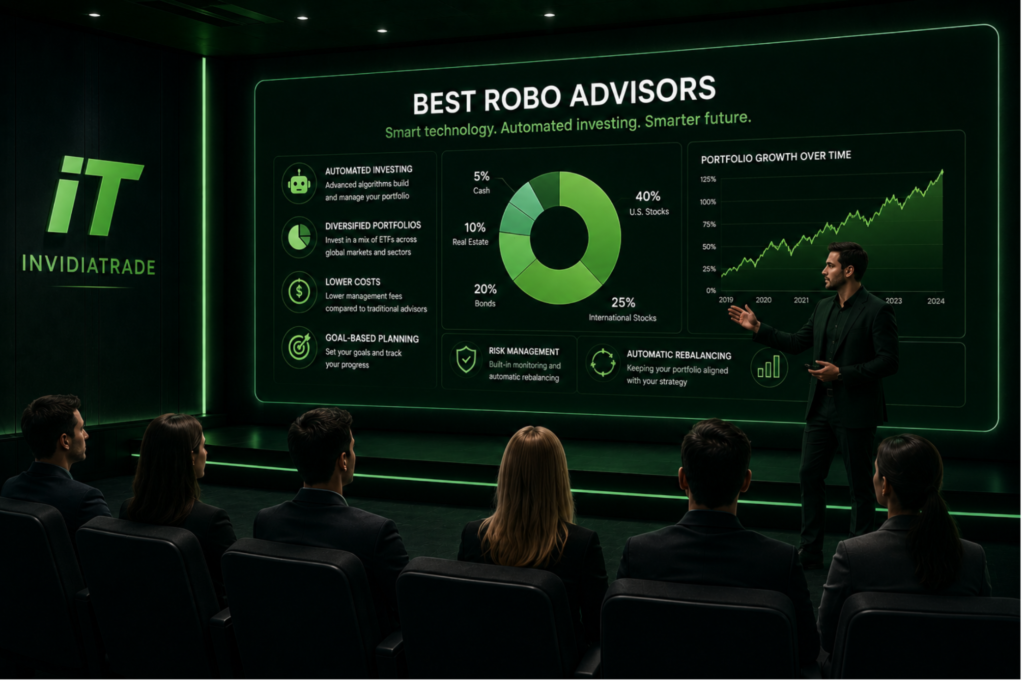
Most robo advisors invest primarily in exchange-traded funds (ETFs).
ETFs allow investors to gain exposure to many companies or assets through a single investment.
Depending on the platform, portfolios may include:
- Domestic stocks
- International stocks
- Government bonds
- Corporate bonds
- Real estate investment trusts (REITs)
- Emerging markets
- Cash investments
Using multiple asset classes helps diversify the portfolio.
Understanding Diversification
Diversification is one of the core principles behind automated investing.
Rather than concentrating investments in one company or one industry, robo advisors spread investments across different markets and asset classes.
Diversification may help:
- Reduce concentration risk
- Improve portfolio balance
- Manage volatility
- Increase market exposure
- Support long-term investing
Although diversification cannot eliminate losses, it is widely used as a risk management strategy.
Risk Tolerance and Portfolio Selection
Every investor has different financial goals and comfort levels with market risk.
A younger investor saving for retirement may accept greater market fluctuations.
Someone nearing retirement may prefer a more conservative portfolio.
Robo advisors typically determine risk tolerance through questionnaires that evaluate:
- Investment objectives
- Time horizon
- Financial situation
- Previous investment experience
- Comfort during market declines
The recommended portfolio reflects these answers.
Automatic Portfolio Rebalancing
Financial markets constantly change.
As prices rise and fall, the original portfolio allocation can shift.
Many robo advisors automatically rebalance portfolios by buying or selling investments to restore the desired asset allocation.
This process helps keep the portfolio aligned with the investor’s selected strategy.
Goal-Based Investing
Most robo advisors encourage investors to define specific financial goals.
Common examples include:
- Retirement planning
- Home purchases
- Education savings
- Emergency funds
- Long-term wealth building
Instead of focusing only on short-term market movements, investors can track progress toward these personal objectives.
Low-Cost Investment Management
One reason investors choose robo advisors is cost.
Because portfolio management is largely automated, management fees are often lower than traditional advisory services.
Lower fees can improve long-term investment efficiency since fewer costs reduce the impact on portfolio growth over time.
Automated Investing
Many platforms encourage investors to make regular contributions.
Automatic deposits allow investors to build portfolios consistently without needing to manually invest every month.
Regular investing may help reduce emotional decision-making during periods of market volatility.
Consistency is often viewed as one of the most important aspects of long-term investing.
Mobile Portfolio Management
Modern robo advisors usually provide mobile applications that allow users to:
- Review account balances
- Track portfolio performance
- Make deposits
- Update financial goals
- View asset allocation
- Monitor investment progress
Mobile access makes investing convenient while allowing users to stay informed about their portfolios.
Educational Resources
Many platforms also include educational content.
Investors may have access to:
- Beginner investment guides
- Retirement planning articles
- Market education
- Investment calculators
- Financial planning tools
- Risk management resources
These materials help investors better understand how investing works.

Tax-Efficient Investing
Some robo advisors offer tax optimization strategies.
Depending on the provider and local regulations, features may include:
- Tax-loss harvesting
- Asset location strategies
- Dividend management
- Capital gains optimization
These strategies are generally intended to improve tax efficiency where applicable.
Investors should consult qualified tax professionals regarding their individual circumstances.
Benefits of Robo Advisors
Robo advisors provide several advantages for investors.
These often include:
- Automated portfolio management
- Diversification
- Lower fees
- Easy account setup
- Long-term investing support
- Portfolio rebalancing
- Goal tracking
- Mobile access
- Educational resources
For many investors, these features reduce the complexity of investing.
Limitations of Robo Advisors
Despite their advantages, robo advisors also have limitations.
These may include:
- Limited investment customization
- Less direct human interaction
- Standardized portfolio models
- Fewer advanced investment strategies
- Limited estate or tax planning services
Investors with complex financial needs may require personalized advice from a financial professional.
Robo Advisors vs Traditional Financial Advisors
Both approaches have advantages.
Robo advisors often appeal to investors seeking:
- Lower costs
- Automated investing
- Simplicity
- Long-term portfolio management
Traditional advisors may better serve individuals needing:
- Estate planning
- Retirement income planning
- Business financial advice
- Tax planning
- Personalized investment strategies
The best choice depends on personal financial circumstances.
Can Robo Advisors Predict the Market?
No investment platform can consistently predict future market performance.
Most robo advisors do not attempt to outperform the market through active trading.
Instead, they generally focus on maintaining diversified portfolios designed for long-term investing based on each investor’s risk profile.
Long-term investing emphasizes consistency rather than attempting to forecast short-term market movements.
The Importance of Investment Time Horizon
Time horizon plays an important role in portfolio construction.
Investors saving for retirement decades into the future may receive different portfolio recommendations than someone saving for a near-term goal.
Longer investment periods generally provide more time to recover from temporary market declines.
Managing Investment Risk
Every investment carries risk.
Robo advisors cannot eliminate market losses.
However, many platforms help investors manage risk through:
- Diversification
- Portfolio rebalancing
- Goal-based investing
- Risk assessments
- Long-term asset allocation
Understanding personal risk tolerance remains essential regardless of the investment platform.
Security Features
Investment platforms typically use multiple security measures.
Common protections include:
- Two-factor authentication
- Identity verification
- Data encryption
- Secure account access
- Fraud monitoring
Investors should also protect their own accounts by using strong passwords and enabling available security features.
Artificial Intelligence and the Future of Investing
Artificial intelligence continues to influence financial technology.
Some robo advisors now incorporate AI to improve:
- Portfolio monitoring
- Customer support
- Financial planning tools
- Investment recommendations
- Data analysis
Although AI may improve efficiency, it does not eliminate investment risk or guarantee returns.
Common Mistakes Investors Should Avoid
Automation simplifies investing, but investors can still make mistakes.
Common examples include:
- Chasing recent market performance
- Panic selling during downturns
- Frequently changing investment strategies
- Ignoring long-term goals
- Investing money needed for short-term expenses
- Choosing a portfolio that exceeds personal risk tolerance
Successful investing often depends on patience and consistency.
Questions to Ask Before Choosing a Robo Advisor
Before selecting a platform, investors should consider:
- What are the management fees?
- What investments are included?
- Does the platform rebalance automatically?
- Are there minimum investment requirements?
- Does it offer tax-efficient investing?
- Is customer support available?
- How secure is the platform?
- Is the mobile app easy to use?
- Does it provide educational resources?
Comparing these features can help investors make informed decisions.
Are Robo Advisors Suitable for Beginners?
Many beginners appreciate robo advisors because they reduce complexity.
Instead of researching individual securities, investors can focus on:
- Building consistent habits
- Learning investment fundamentals
- Saving regularly
- Managing long-term goals
However, understanding the basics of investing remains valuable regardless of the platform used.
The Future of Robo Advisors
Technology continues to shape wealth management.
Future robo advisor platforms may include:
- More advanced artificial intelligence
- Personalized financial planning
- Enhanced retirement tools
- Improved tax optimization
- Better investment education
- Expanded portfolio customization
As financial technology evolves, automated investing is expected to continue growing in popularity.
Final Thoughts
The best robo advisors provide an accessible way to begin investing through automation, diversification, and long-term portfolio management.
They help simplify investment decisions while encouraging consistent saving and disciplined investing.
Although robo advisors offer convenience and lower costs, they cannot guarantee investment success. Financial markets remain unpredictable, and all investments involve risk.
Before selecting a robo advisor, investors should carefully compare fees, investment strategies, available features, customer support, security, and how well the platform aligns with their financial goals.
A well-informed investor is always in a stronger position to make confident long-term financial decisions.
Disclaimer
Investing involves risk, including the potential loss of principal. Robo advisors do not guarantee positive investment returns and cannot eliminate market risk. Portfolio performance depends on market conditions, investment strategy, and individual financial circumstances. This article is provided for educational and informational purposes only and should not be considered financial, investment, legal, or tax advice. Readers should perform their own research and consult a qualified financial professional before making investment decisions.
Best Robo Advisors: How Automated Investing Is Changing Wealth Management
Table of Contents Investing has become more accessible than ever before. Technology has transformed the financial industry, making it possible for individuals to build

CFDs Meaning Trading: Understanding How Contracts for Difference Work
Table of Contents Contracts for Difference, commonly known as CFDs, have become one of the most popular financial instruments among active traders. If you’ve

Top Stock Brokers: What Traders Should Look For Before Choosing a Platform
Table of Contents Finding the top stock brokers is one of the most important steps for anyone who wants to trade or invest in

Best Day Trading App: Key Features That Separate Great Trading Platforms From the Rest
Table of Contents Finding the best day trading app has become a priority for many traders looking to navigate today’s fast-moving financial markets. With

AI Stock Trading: Benefits, Risks, and What Traders Need to Know in 2026
Table of Contents Artificial intelligence has become one of the most influential technologies in modern finance. What was once limited to major banks, hedge

Currency Strength Meter: A Practical Guide for Forex Traders
Table of Contents What Is a Currency Strength Meter? A currency strength meter is a tool that helps forex traders measure the relative strength